
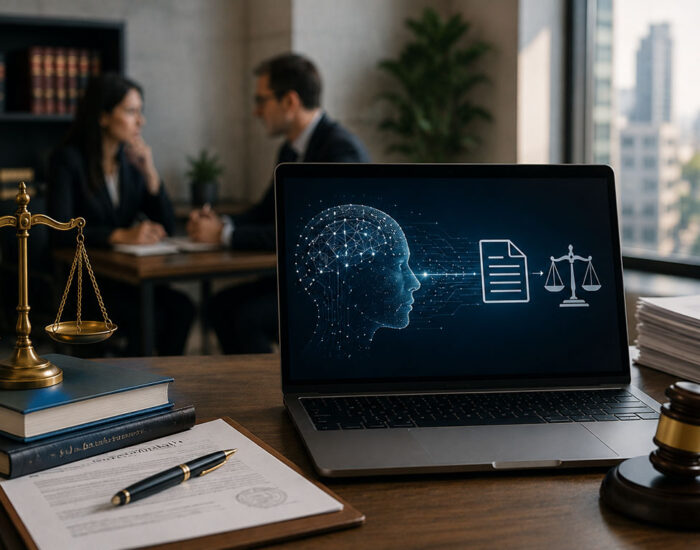
Can AI Be Trusted for Patent & Legal Translations?
AI translation tools are evolving rapidly, but within patent law, intellectual property and legal translation, accuracy cannot be left to automation alone. When legal meaning, technical terminology and confidentiality matter, human expertise remains essential.
Artificial intelligence is changing the translation industry. Businesses now have access to instant machine translation tools capable of translating documents within seconds. While these technologies can support simple communication tasks, they create significant risks when used for patent, trademark and legal translations without specialist human review.
For intellectual property law firms, patent attorneys and international businesses, translation accuracy is not simply about readability — it is about protecting legal meaning, technical intent and commercial value across multiple jurisdictions.
The Rise of AI Translation Tools
AI-powered translation platforms have improved dramatically in recent years. They can help businesses understand general content quickly and may support internal workflows or low-risk communications.
However, legal and patent documentation presents a completely different level of complexity. Intellectual property translations require technical understanding, legal precision and contextual awareness that automated systems still struggle to deliver consistently.
Why Legal Translation Accuracy Matters
Patent and legal documents are designed to define ownership, protection and legal rights with absolute precision.
A single mistranslated technical phrase or legal term can potentially alter the meaning of a patent claim, create ambiguity or weaken intellectual property protection internationally.
Where AI Translation Still Falls Short
Technical Terminology
Patent documents frequently contain advanced engineering, scientific and technical terminology. AI systems often struggle when terminology has multiple meanings depending on industry context.
Legal Context & Interpretation
Legal wording is intentionally precise. Small changes in phrasing can significantly affect interpretation across jurisdictions. Human legal linguists understand the nuance behind terminology, sentence structure and legal intent in ways automated systems cannot fully replicate.
Consistency Across Large Documents
Patent applications can contain thousands of repeated technical references. Consistent terminology throughout the document is essential. AI tools may introduce subtle inconsistencies that become problematic during examination or litigation.
Confidentiality Concerns
Many businesses remain unaware that uploading sensitive legal documentation into public AI platforms may create confidentiality and data security concerns. Patent applications often contain commercially valuable information that requires secure handling procedures.
AI Should Support Human Experts — Not Replace Them
The future of professional translation will likely involve AI-assisted workflows combined with specialist human review.
For high-risk sectors such as intellectual property law, patents and legal documentation, experienced human translators remain essential to ensuring technical accuracy, legal clarity and professional accountability.
Why Specialist Human Translation Still Matters
Professional patent and legal translators provide more than language conversion. They understand industry terminology, legal structures, contextual meaning and the commercial importance behind every document.
At Olive Translations, our specialist linguists support patent attorneys, IP law firms and technical organisations requiring accurate, confidential and professionally reviewed translations for international markets.
Need Accurate Patent or Legal Translation Support?
Olive Translations provides specialist human-reviewed patent, trademark and legal translation services for intellectual property professionals and international businesses.
Request a Translation Quote